He didn’t even look at her. He just adjusted his collar and muttered indifferently, «Why are you bothering me with this? I don’t know anything about that stuff. Do what you want, but I’m going to the club. There are plenty of pretty girls there, and the guys are waiting for me.»
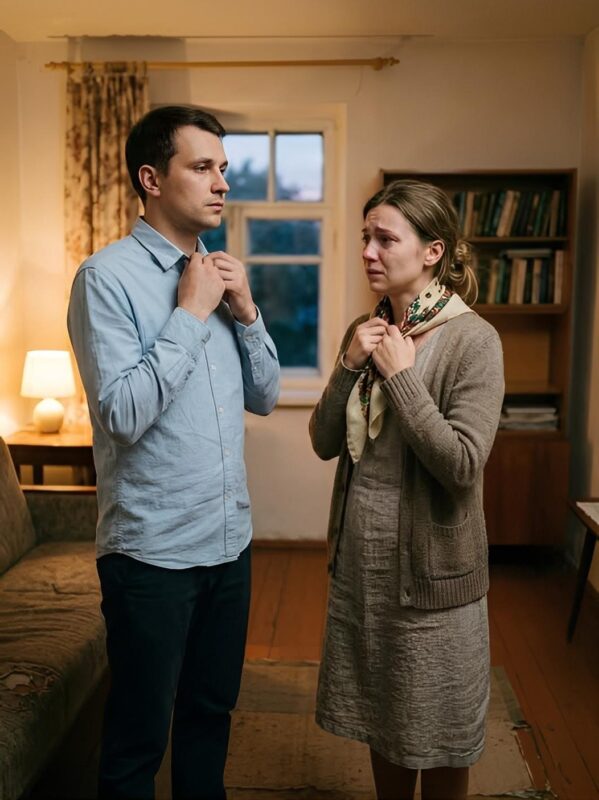
Twenty years ago, in Western Ukraine, lavish weddings weren’t always the norm. When Mariya’s parents heard the truth, they didn’t kick her out, but they didn’t throw a celebration either. They held a «vechorok»—a modest family dinner. Vasyl sat there with a stone face, looking like he’d been dragged there against his will. He got married, but his heart stayed elsewhere—at the dances, in the arms of other women.
As they say, a baby is on the way, but his head is full of hot air. Vasyl lived his life as if he were writing a rough draft that he could just erase later.
Five years later, while Mariya was rocking two daughters and managing the entire household, he wasn’t above making eyes at her best friend. Then there was another woman in the neighboring village. Word was, he had a son growing up there too—a boy Vasyl had never seen and never cared to know.
«At least hold your child!» Mariya would scream in desperation during one of their many fights. «This is your baby, Vasyl!»
«Mine?» he’d laugh back. «How should I know? Shut your mouth. I want to live my life, not lock myself away counting diapers.»
Years passed. The children grew up, got their educations, and started careers. Mariya, exhausted by the coldness of her own home, finally packed her bags. She moved abroad alone at first to earn a living, and eventually brought the girls over to join her. Life overseas took a different turn.
Now, Vasyl sits on a bench outside his house. Neighbors pass by and nod, but their eyes hold long memories. They remember everything: Mariya’s tear-stained face, Vasyl’s mistresses, and his arrogant stride.
«You see, Vasyl,» says his neighbor Stepan, leaning against the fence. «Back then, you turned your nose up at water, saying the ‘white stuff’ was sweeter. Now, there’s no one left to even bring you a glass.»
Vasyl stays silent as tears begin to roll down his face. His phone—old and worn—lies on the table. He’s waiting for a call from his daughters. Do they call? Who knows. Maybe once a month to check if he’s still breathing. Or perhaps the silence in the receiver is simply the echo of the indifference he sowed so many years ago.
The house is cold now. Heating is expensive, and he no longer has the strength to haul firewood. Vasyl looks at a wedding photo from that long-ago dinner. He and Mariya are young. She is looking at him with hope; he is looking right past her.
He lived his life «fast and loose.» Now, his greatest fear is that his last sip of water will be taken alone with nothing but his conscience.
It gets hardest for Vasyl in the evenings, when the sun dips behind the woods bordering the next village. Behind those trees lives the woman he once called his «secret.» And there lives a young man with those same broad shoulders and the same arch of the eyebrows—or so the neighbors say.
Once, when Vasyl still had strength in his legs, he ran into the boy at the regional market. For the first time in his life, his heart stung, and it wasn’t from illness. The boy brushed past him, shoulder to shoulder, without even a glance.
Vasyl wanted to cry out, «Son!» but the words caught in his throat. He realized that for this child, he doesn’t exist. He is just an old stranger, a shadow from the past who never gave a cent for shoes or a kind word on a birthday.
His house is now filled with the smell of Sunday pies that no one bakes and dust that no one wipes away. There is a magnet on the fridge that says «Italy.» His oldest daughter sent it five years ago. It was the last package he received.
Whenever the phone rings, Vasyl flinches. But it’s usually a wrong number or a telemarketer offering new windows.
«Hello? Mariya?» he sometimes rasps into the phone, hoping for a miracle.
«Vasyl, it’s me, your neighbor Hanna. Unlock the door; I brought you some milk. They say you didn’t even leave the house yesterday.»
Hanna sets the jar on the table and looks at him with a pity that makes Vasyl want to scream.
«Still no call?» she asks. —she asks softly.
«They call!» he lies, shifting his gaze. «They say they’re coming to get me soon. They’re getting the paperwork ready. It’s just, you know… work. They’re busy people.»
Hanna only sighs. She knows the daughters changed their numbers long ago. She knows that every Sunday at a church overseas, Mariya lights a candle «for the health of her enemies,» because she could never find any other way to forgive him.
Once, Vasyl thought that modest wedding dinner was a humiliation. Now, he would give everything to be back at that table—to have Mariya rest her hand on his shoulder again, to have his father-in-law pour him a drink like a member of the family, even if he did it begrudgingly.
He sits at the table and breaks off a piece of stale bread. Years ago, he chased after women in search of «freedom.» Now, he has so much of that freedom it chokes him every night. His freedom from responsibility has turned into a freedom from love.
«They say when a neighbor’s house is on fire, the whole village runs to help. But when Vasyl’s soul is burning, no one sees it,» the old women whisper at the local shop.
He walks to the window. Outside, a young man is leading a toddler by the hand. The child laughs, reaching up for his father. Vasyl presses his forehead against the cold glass. He finally understands what a «child» is. It’s not a «problem» you run away from to go to a club. It is the only thread that holds a person above the abyss of being forgotten.
And in his life, that thread is severed. Severed by all three children. By all the women. By every «I don’t care» he ever spat in the face of fate.
Vasyl lies down in his cold bed without undressing. He is afraid to fall asleep and never wake up, knowing the door is locked from the inside and days would pass before anyone noticed it had finally gone silent in the home of the former local heartthrob.
Sunday morning was unusually quiet. The village church bells echoed across the valley, calling the faithful to service. Vasyl sat on the edge of his bed for a long time, looking at his hands—once strong hands that confidently held other men’s wives, now gnarled and trembling.
For the first time in years, he pulled a clean shirt from the closet. The one Mariya had bought him a lifetime ago. It was out of style, a bit too large, and smelled of dampness.
Vasyl walked to the church slowly, stopping every few yards. People stared. Handsome Vasyl, who always held his head so high, was now walking hunched toward the earth, as if carrying invisible sacks of stones from his past.
He couldn’t bring himself to go inside. Instead, he sat on a bench under an ancient linden tree near the entrance. The choir’s singing drifted through the open doors. Vasyl closed his eyes, and for a moment, he thought he heard his daughters’ laughter—those little girls he used to push away so they wouldn’t finish getting ready for his nights out.
«God,» he whispered dryly, «I’m not asking for health… I just ask that my children remember me just once without pain.»
«Children… forgive me… please forgive me,» he whispered into the empty courtyard. «Forgive me for not being a father. For not holding your hand when you were scared. For trading you for nightclubs and other women… God… give me the strength to just die in a way that lets my conscience rest, even for a second. Let me feel, just for a moment, that my breathing this spring wasn’t in vain.»
In that minute, his whole life flashed before his eyes. He saw Mariya at that wedding dinner again—her sad eyes and her simple, modest white dress. He saw the girlfriend he used to sneak through back gardens to visit. He saw the face of the son he didn’t know in the next village…
Last week, it went completely quiet around Vasyl’s house. The neighbors noticed the lights didn’t come on in the evening. When they opened the door, they found him on the bed. He lay there peacefully, the wrinkles on his forehead smoothed out, his hand tightly clutching a photograph of his daughters.
No one came from abroad for the funeral—the trip was too long, and too many grudges had piled up over the decades. Only the locals came to see him off on his final journey.
They say that as the coffin was being lowered into the earth, a young man from the neighboring village stood at the edge of the cemetery. He watched the fresh grave for a long time without coming close. Then, he placed two carnations on the ground and walked away without saying a word.
A Note to the Reader: This story serves as a reminder to us all. Cherish those beside you while they are still waiting for your love.