“Help me…”
A fractured text message sent me racing home, breaking every speed limit. I kicked the door in to a suffocating silence. In the soundproofed nursery, my newborn son was turning purple from crying. On the living room couch, my wife was unconscious with a dangerously high fever.
And ten feet away, my mother calmly sipped her wine.
“Oh, stop encouraging her, David,” she sighed. “She’s just sulking because I made her finish her chores.”
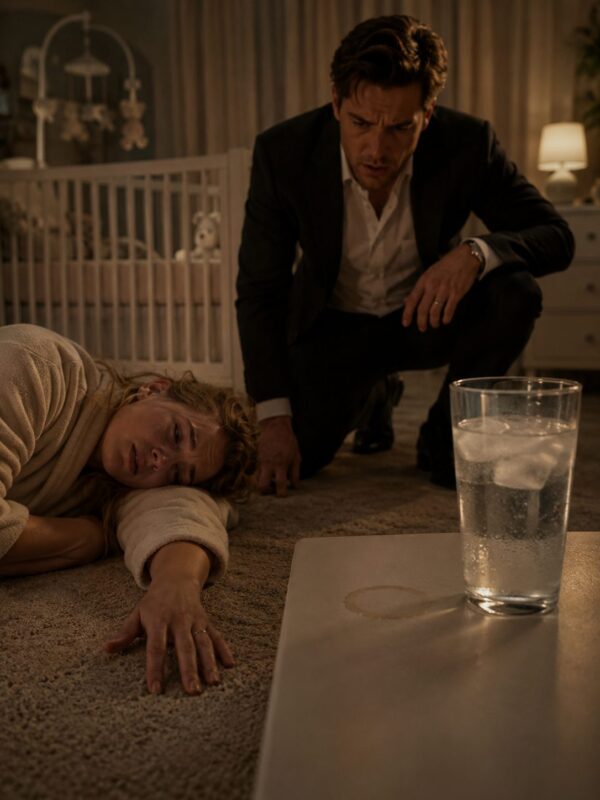
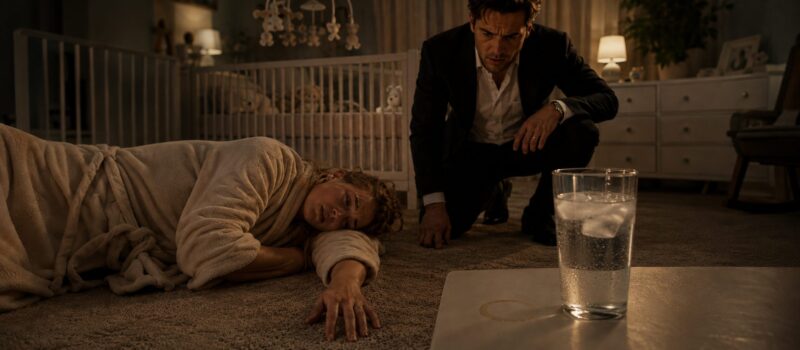
She had forced my post-partum, recovering wife to cook for hours, hid her phone on top of the fridge, and placed a glass of water *just* out of her limp reach. Doctors later told me thirty more minutes without care would have put Clara in a coma.
By the next morning, the police and Child Protective Services showed up at the hospital. My mother had struck first, framing Clara as a psychotic mother and claiming I’d kidnapped my own son. My phone blew up with seventy-three missed calls and hateful messages from relatives demanding I commit my wife to a psych ward.
When I walked into the emergency family meeting at the hospital, my mother sat at the center of the room, clutching a tissue and playing the heartbroken, traumatized victim to perfection.
«What Clara did to your mother is unforgivable,» my uncle boomed. «You will apologize right now.»
My mother sniffled, a perfectly timed tear rolling down her cheek. «I only wanted to help,» she whimpered.
I didn’t argue. I didn’t yell. I just unzipped my bag, pulled out my laptop, and plugged it into the large monitor on the wall.
«Mom,» I said, my dead-calm tone making her flinch. «Remember those security cameras I told you were for package thefts?»
Her fake tears stopped instantly.
«I lied,» I whispered. Then I hit play.
Stuck in the gridlocked arteries of downtown Chicago, the relentless drum of rain on my windshield did nothing to wash away the exhaustion of a grueling Tuesday. Then my phone vibrated in the cup holder. It was a message from my wife, Clara:
“David, come home. Help me, she won’t let—”
That was it. No period, no follow-up—just a hanging digital precipice.
I called her back instantly. Straight to voicemail. I tried again. Voicemail. A cold dread coiled in my gut, a primal instinct screaming that the fragile world I’d left behind that morning was shattering. Clara was four weeks postpartum, navigating the beautiful, terrifying labyrinth of new motherhood with our son, Leo. And she wasn’t alone. My mother, Eleanor, had insisted on staying with us to “help.”
I’d spent thirty-four years making excuses for my mother’s domineering nature, writing off her passive-aggressive cruelty as a “strong personality” and framing her relentless demands as “traditional values.” But that truncated text shattered the illusion.
I swerved out of the bumper-to-bumper traffic, ignoring the blaring horns, and took the shoulder to the nearest exit. I broke every speed limit on the way home, my knuckles white on the wheel as my mind conjured one nightmare scenario after another.
When I finally turned the key in our apartment lock, I braced myself for chaos. What greeted me was so much worse.
An eerie, suffocating silence.
The apartment smelled sharply of rendered beef fat, thyme, and scorched garlic—the unmistakable scent of my mother’s signature Boeuf Bourguignon, a dish requiring hours of painstaking, on-your-feet prep work.
“Clara?” I called out, my voice cracking in the heavy air.
No answer.
I moved down the hallway, the quiet pressing heavily against my eardrums. A house with a newborn is never this still. Then I noticed the nursery door. It was pulled shut tight, a rolled-up towel wedged into the gap underneath.
I kicked the towel aside and threw the door open. The noise hit me like a physical blow.
Leo was in his bassinet, his tiny face a mottled, terrifying shade of purple. His fists were clenched tight, and his cries weren’t normal newborn wails—they were raw, ragged shrieks from a baby who’d been screaming until his vocal cords bled. The room had been intentionally soundproofed.
I scooped him up, pressing his trembling, sweat-soaked body to my chest as his heart hammered like a trapped bird.
“I’ve got you, buddy. I’ve got you,” I whispered, panic rising in my throat as I turned back to the hallway to find my wife.
I found her in the living room.
Clara was collapsed sideways on the sofa, her skin the color of old parchment. Her lips were cracked and bleeding, her eyes rolled back in her head. Her chest barely moved.
And ten feet away, sitting at the dining table with a crystal glass of red wine and a perfectly plated serving of stew, was my mother.
Eleanor didn’t even look up as I dropped to my knees beside the couch. She calmly cut a piece of meat, brought it to her mouth, and chewed.
“Clara! Baby, look at me,” I begged, shaking her shoulder. Her head lolled. She was burning up, yet her skin was clammy to the touch.
“Oh, for heaven’s sake, David, stop encouraging her,” my mother sighed, dabbing the corners of her mouth with a linen napkin. “Women today are so theatrical. She’s just sulking because I made her finish her chores.”
I spun around, staring at my own mother as if she were a monster wearing human skin. In that terrifyingly clear moment, I realized she was.
Then I looked at the coffee table, and the true depth of her malice hit me. Resting right at the far edge, barely an inch beyond Clara’s limp, outstretched fingertips, was a tall glass of ice water. The condensation ring on the wood showed it had originally been placed closer.
Someone had deliberately slid it out of reach.