«I bought nearly $60 worth of meat specifically for my mother, so don’t keep us waiting!» he barked, loading the heavy bags. I looked at those bags and, for the first time, felt cold determination rather than hurt—a resolve to finally change this script.
«We’re going to my mother’s again, Catherine, and that’s final,» Paul snapped, not even looking up from his bowl of borscht.
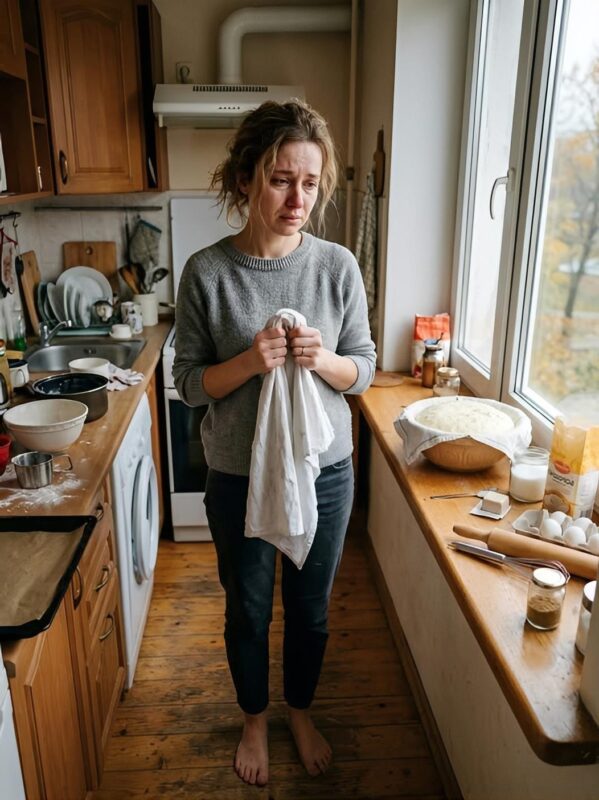
«What do you mean, ‘that’s final’? We agreed we’d finally spend this Easter with my parents,» I said, feeling my chest tighten with that familiar ache.
«Yours can wait. They’re still young and healthy, but my mother is all alone. She’ll be devastated if we don’t show up,» he cut me off, pushing back his chair.
«And my mother won’t be? She’s already started her basket; she even ordered that ham you like so much,» my voice trembled, but Paul had already walked out of the kitchen.
I stood alone in the middle of the room, clutching a damp towel. On the windowsill, the dough for the Easter bread was already rising. The house smelled of vanilla and yeast, but any sense of holiday spirit had vanished.
It happened every year. Every major holiday, whether Christmas or Easter, turned into a battle for the right to be heard. And every time, I lost the war because Paul believed his mother’s peace of mind was worth more than my feelings.
His mother, Stephanie, was «old school.» She had a way of sighing that made everyone around her feel guilty for simply breathing.
«Oh, children, it’s fine. I’ll just eat my egg alone as long as you two are happy,» she would say over the phone, but her voice carried such a heavy sadness that Paul would immediately grab his car keys.
I looked at my hands, stained with flour. My mother, Anna, never manipulated anyone. She just waited. She would set an extra place at the table, watch the road through the window, and then sigh quietly when we called again to say we weren’t coming.
This year, I promised myself things would be different. Easter is about rebirth and light. So why was there so much darkness in my life from constantly being pushed to the background?
«Paul, come back! We need to finish this conversation!» I called into the hallway, wiping my hands on my apron.
He appeared in the doorway, irritated, jacket in hand. His face was set like a mask—the one he wore whenever the subject of his family came up.
«What is there to talk about? It’s settled. Mom is waiting. Period.»
«And what about me? What about my right to spend the holiday with the people I love? Have you ever once asked what I want?»
He just grunted and walked out, slamming the door so hard a small ceramic angel nearly fell off the shelf. I sank onto a stool, feeling hot tears track down my cheeks.
In our village, Easter was always something special. Neighbors were already whitewashing fences and raking away last year’s leaves. The air grew so clear it felt like you could see all the way to the horizon.
I remembered going to church with my mother as a child. She taught me how to fold my headscarf properly and not to shove in line for the holy water. My father always carried the heavy basket, beaming with pride at his beautiful wife and daughter.
Now I am a grown woman with my own home and my own husband. Yet somehow, I feel like a little girl left in the corner because the adults decided her opinion didn’t matter.
As dusk began to fall outside, I mechanically continued to knead the dough, pouring all my resentment and anger into it. They say you should bake Easter bread with a pure soul, but where do you find that purity when your heart is breaking into a million pieces?
Suddenly, the phone rang. It was my mother-in-law. I took a deep breath, trying to steady my voice so she wouldn’t sense anything was wrong.
«Hello, Catherine, my dear,» she chirped into the receiver. «Did you remind Paul to pick up the farm-fresh cottage cheese? The store-bought stuff is nothing but chalk.»
«I reminded him, Stephanie. We’ll be there, as usual. Don’t worry.»
«Well, that’s good, that’s wonderful. My neighbor was asking if the kids were coming, and I told her—of course they are! My Paul would never leave me all alone.»
After that call, I felt even worse. I realized Paul hadn’t even tried to find a compromise. He had simply presented it to her as a done deal, ensuring everything would go exactly how she wanted.
I stepped out onto the porch. The evening chill cleared my head a bit. From across the fence, I could hear the neighbors laughing—they were also getting ready for the holiday, as relatives arrived from the city.
I wanted to just get in the car and drive to my parents. Without Paul. Without explanations. I just wanted to hug my mom and feel like I was home—a place where I don’t have to fight for my place or wait in line for someone’s attention.
But the fear of a scandal, of «what people would say,» held me tighter than any chains. In our village, a divorce or even a loud argument during the holidays was considered a disgrace.
I went back to the kitchen. The dough had risen—lush and full of life. I began placing it into the baking tins, but my movements were heavy, as if I were moving stones.
Paul came home late. He didn’t apologize. He just walked past me with a short «goodnight.» I stayed in the kitchen, waiting for the bread to bake.
The smell of fresh bread filled the house, but it brought no joy. It was the scent of my submission. I looked at the golden, rounded tops of the loaves and wondered how many more years I would stand by the stove like this, fulfilling someone else’s will.
The next morning, I got up before my husband. I packed the basket: the bread, the eggs I had hand-painted during the night, and a piece of cured ham. But something inside me had shifted. A string that had held my patience together finally snapped.
«Are you ready? We need to get moving; it’s a long drive,» I said to Paul when he appeared in the kitchen.
«Yeah, let me finish my coffee and we’ll go. Mom has already called three times asking if we’ve left yet.»
We drove in silence. The road to his mother’s house wound through fields where the first green shoots were breaking through. The beauty of nature stood in stark contrast to the emptiness that had settled in my soul.
Stephanie met us at the doorstep. She was wearing a new headscarf, her eyes shining with victory. She knew she had won this round again in the invisible battle for her son.
«Oh, children, finally!» She rushed to hug Paul, barely nodding in my direction. «Come in, sit down. I’ve already set the table with all your favorites.»
The entire day followed a pre-written script. My mother-in-law complained about her health, Paul fixed a faucet in her kitchen, and I served, cleaned, and listened to stories about what a «golden son» she had.
My parents called in the afternoon. My mom’s voice was soft, but she tried to sound upbeat.
«Christ is Risen, honey! How are you guys? Is your mother-in-law happy?»
«He is Risen indeed, Mom. Yes, everything is fine. How about you?»
«Oh, we’re alright… the neighbor stopped by for a bit. Your father is a little sad, though—he keeps checking his phone, hoping maybe you’d drop in for at least an hour… But we understand. Paul’s mother has it harder; she’s all alone.»
Those words from my mother—»we understand»—were the final straw. Why do they always have to be the ones who understand? Why is their love so selfless that it’s taken for granted and walked all over?
I walked out into the garden. An old apple tree was just starting to bloom. I pressed my forehead against its rough bark and closed my eyes.
«Are you miserable here?» I heard Paul’s voice behind me.
I opened my eyes and looked at him. He stood there holding an apple, looking at me with a strange lack of comprehension.
«I’m not miserable, Paul. I’m nothing. I’ve simply disappeared. I’m not part of this holiday; I’m not in your plans. I’m just an accessory to your duty to your mother.»
«Are you starting this again?» He sighed, rolling his eyes. «Can you go just one day without making a scene?»
«This isn’t a scene. This is the truth. You say she’ll be hurt. But what about me? What about my parents? Have you ever once considered that one day, there will be no one left to bake bread in my childhood home, and I will never forgive myself for these lost years?»
He didn’t answer. He just turned around and went back into the house. I stayed under the apple tree, feeling the cold air bite through to my bones.
In the evening, as we were getting ready to leave, Stephanie started packing bags for us. She stuffed in everything from eggs to preserves, even though she knew we had plenty of our own.
«Take this, and this… and come back next week to paint the fence; Paulie promised,» she said, without looking at me.
I stayed silent in the car. Paul tried to start a conversation about work and the farm, but I gave only one-word answers. My soul was elsewhere—back at the table in my parents’ house, where a loaf of Easter bread sat untouched.
When we pulled into our driveway, I didn’t get out right away.
«Paul, listen to me carefully. This was the last time.»
«What do you mean?» He looked at me, bewildered.
«Next year, I am going to my parents. With or without you. I am done betraying the people who truly love me just for the sake of your comfort.»
«Are you crazy? There’ll be a scandal! The whole village will talk! It’ll give my mother a heart attack!»
«Her heart will be fine; she’s tougher than both of us. But my heart can’t take this injustice anymore. The choice is yours.»
I got out of the car and walked into the house. That night, for the first time, I slept peacefully. The decision was made, and though I knew difficult conversations—and perhaps a major rift—lay ahead, I felt that I had finally done the right thing.
Life is too short to live it in the shadow of other people’s expectations. We are often so afraid of offending those who manipulate us that we aren’t afraid at all of losing those who love us quietly and devotedly.
Easter passed. The bread dried out; the colored eggs were eaten. But that bitter taste on my lips stayed with me as a reminder. We have a right to our own families, our own traditions, and to be respected.
Now, I often think about that apple tree in my mother-in-law’s garden. It blooms every year without asking for permission. It simply grows and offers its beauty. Perhaps we women should be like that sometimes—simply growing in our own truth.
I don’t know what next year will bring. I don’t know if I’ll have the strength to withstand the pressure, or if Paul will find the courage to stand by my side. But I know one thing for sure: I will no longer be second in line for my own life.
My parents were so happy when I dropped by the day after the holiday. We just drank tea on the porch, and Dad told funny stories from the old days. In that moment, I realized: those moments are the real holiday.
How do you handle holiday dilemmas in your family? Do you ever find yourself sacrificing your own family’s interests for the sake of your spouse or their parents? Is it worth enduring such unfairness just to keep the peace?
All names have been changed at the author’s request. Photo for illustrative purposes only.